| Welcome, Guest |
You have to register before you can post on our site.
|
| Forum Statistics |
» Members: 233
» Latest member: Quinn
» Forum threads: 1,868
» Forum posts: 23,266
Full Statistics
|
| Online Users |
There are currently 393 online users.
» 0 Member(s) | 390 Guest(s)
Yandex, Bing, Applebot
|
| Latest Threads |
Forced Withdrawals [Nox's...
Forum: Red-light district
Last Post: Tatyana
06-14-2026, 01:19 AM
» Replies: 211
» Views: 37,171
|
Monster Manual (CCDPD)
Forum: Government Facilities
Last Post: Dorian
06-13-2026, 12:19 PM
» Replies: 38
» Views: 6,665
|
A Snowed In Hunt
Forum: Underground city
Last Post: Sasha
06-13-2026, 11:58 AM
» Replies: 11
» Views: 1,439
|
Stone Cold
Forum: Central City Flats & Apartments
Last Post: Ilesha
06-13-2026, 11:28 AM
» Replies: 36
» Views: 6,458
|
Home Sweet Home
Forum: Central City Flats & Apartments
Last Post: Cade
06-13-2026, 11:17 AM
» Replies: 75
» Views: 15,095
|
Ghost of Time
Forum: Greater Moscow
Last Post: Nika Raskov
06-04-2026, 03:22 AM
» Replies: 22
» Views: 6,667
|
Dead Weight (Pestovo Coun...
Forum: Place of Enlightenment
Last Post: Jared Vanders
05-27-2026, 05:57 PM
» Replies: 10
» Views: 1,261
|
Phone Call With the Chief...
Forum: The Scroll
Last Post: Anita
05-23-2026, 11:22 PM
» Replies: 0
» Views: 186
|
Show off your BG3 Tavs
Forum: General Discussion
Last Post: Giovanni
05-06-2026, 12:58 AM
» Replies: 33
» Views: 19,788
|
Absence Thread
Forum: General Discussion
Last Post: Ascendancy
04-19-2026, 02:14 PM
» Replies: 443
» Views: 737,180
|
|
|
| Posting outside Moscow |
|
Posted by: Ascendancy - 07-26-2013, 08:01 AM - Forum: About
- Replies (1)
|
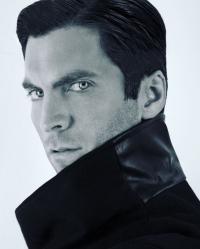 |
The issue has come up several times now regarding what to do if you want to write posts which take place outside the general Moscow area.
At this point we do not have designated boards for such circumstances. If the setting of your post pretty much anywhere in the Central Dominance you can post in the 'Greater Moscow and Golden Ring' board. Some people have been adding their location as a subtitle in the 'description' area of the post for clarification, so you could do something like that. For instance the post I created called The Underworld is subtitled as "Siberia."
However I don't want to deprive writers of such an opportunity to tell their story about how they eventually land in Moscow itself. Therefore, alternatively, if your post takes place much farther away, you may post it as replies to your initial biography under the Biographies and Backstory board.
Technically, the interest in such things has been more of providing a backstory post rather than starting a roleplaying thread. If you are interested in having an interaction with another character for your backstory, (ie, both of your back-stories overlap with one another) you may post back and forth to some degree, just don't carry on for pages and pages like a true RP thread.
However I strongly urge everyone to make it to Moscow eventually, as that is the setting for RP interaction with other characters. Also, future events *grin* may severely restrict travel (depending on how things work out), and everyone will need to be forced into a similar geographic area anyway.
I hope this solution works to everyone's satisfaction. Nothing is set in stone, however. We can continue to reassess alternative solutions if this one does not work out.
-A
|

|
|
| Jon Little Bird |
|
Posted by: Jon Little Bird - 07-25-2013, 10:39 PM - Forum: Biographies & Backstory
- Replies (10)
|
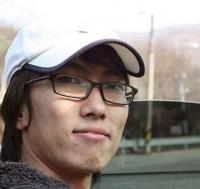 |
Jon Little Bird was born on the Mescalero Apache Indian Reservation in the southwest desert of the United States. He never knew his parents as they perished in a vehicle accident in his first year of life, and he was raised in his early years by his grandfather, affectionately known as Sooyee, an elder of the Mescalero Tribe, who was responsible for teaching Jon the old stories of the gods and the ancients, passed down orally from father to son and grandfather to grandson since the beginning of Time. Sooyee taught Jon about the spirit of nature and of how the world came to be through the actions of the heroes and the katchinas and the medicine they had.
Once, when Jon was five, he asked what his Sooyee meant by medicine: “Do you mean like medicine the doctors have when they give you shots, or what you buy me when I have a cough?”
His grandfather shook his head. “No, nino, not like that.” He scowled. “Curse the death of our mother tongue to these times. What I mean when I say medicine I mean a thing, as a charm, that you cannot see but possess within you, that allows you to change what is into something else as you want it to be. You understand?”
Jon shook his head that he did not. His grandfather sighed and took a breath. “See the hunters that buy into our trophy hunts and slay a mighty twelve-point elk their first day. They have hunting medicine. See those gamblers that sometimes come to our casinos and, no matter what, no matter how careless they bet or what fools they make of themselves, they walk away winners. As if they cannot lose. This is medicine.”
Jon went to sleep that night, not really understanding what Sooyee meant by medicine. But further stories began to make him think more on the subject, especially as he began to learn of the stories of Coyote: the sly god bearing resemblance to the animal, who was also not a god but tricked god and man alike with his strong medicine. Coyote tricked the gods into giving man Fire, so it was said, and brought a mountain up to split a river in two and end a division between men and women so the First People could be born, and also tended to get drunk on White Man's whiskey and steal all his possessions from him.
It all confused Jon. At times Coyote was at odds with the great gods, at other times he was a god...still other times he seemed more a scoundrel and troublemaker than anything else.
When he was a little older, he asked his grandfather further about Coyote: “What was Coyote, Sooyee? Was he good? Was he evil? It seems maybe he was a little of both sometimes.”
“Now, now, nino,” his grandfather said. “First of all, Coyote wasn't. Coyote is and always will be, as will all the other spirits. They are eternal, and cannot die even though they do. The Great Spirit that flows through all things and makes the trees grow and the rains come will always exist, as will all the things that make up it, including the kachinas and, yes, Coyote, and me and you.
“There are forces that make up the Great Spirit, some that are benevolent and some that are less so. The Bear is a part of the great spirit but he is a danger to you, for it is to his benefit if he can kill you and eat you. Do you understand?”
“Yes, Sooyee.”
“Some forces did not want man to be, and some do still want man to be no more. There are even some spirits that are benevolent sometimes but malevolent other times. The wind. The rains. Fire. Understand?”
Jon nodded.
“Coyote...as I have learned through all the stories...Coyote was on our side. Everything he did was to the benefit of man even if he were to incur the wrath of the other gods. How he tied a birch tree to his tail and stole away with fire? That gave us the means to take ourselves out of the caves. How he pulled out the blanket beneath the nice rows of stars the gods had made and threw them into the constellations we know now? This gave us the gift of navigation which allowed us to connect with one another and build a civilization. No one can say what his motives were, but his actions were such that it allowed us to thrive as a people.”
Jon nodded, though he didn't really understand yet.
His grandfather could not help but mention to the other Elders the interest Jon had taken to learning about the old ways. So at times medicine men, as they called themselves, came to him and took him places. None of them were arrogant enough to claim they had any actual medicine. Able to work miracles just as Coyote and the other gods, eternally young, they had once been a part of the people and lived with them, protecting them with their medicine, but they had been long gone even before the White Man arrived. Still, his tribe's elders did what they could to teach Jon the rituals. They described to Jon how he must venture out into the wilderness and find his spirit guide.
So was at the age of thirteen Jon ventured outdoors in the lush pine-tree forest of the reservation. It was already starting to show signs of drought from overuse of the water table by his time, but was still tranquil. Not quite sure what to do, he lay down against a tall fir tree, listening to a subtle river flow, and feel like he was one with all around him. He thought upon the stories of his elders of the Great Spirit and when he was silent enough for long enough, could almost feel himself melting into his surroundings. He closed his eyes and imagined he was really awake and wandering among the trees, swimming in the river with the fish, and running alongside the deer. As if he could simply seep into the earth and become one with it.
And he found he could see from his forehead. Around him was the forest, behind him was himself sleeping. He found he could wander as he pleased away from his sleeping body. A thrum passed through his spirit and he felt eyes upon him.
“Who is there?” he called out.
He saw a blur of motion coming from the tree line. It appeared to be coming right at him. Jon winced and braced for an impact with whatever the thing was.
The thing stopped before him. It was a coyote, sleek with streaks of white, silver and gray fur, the largest coyote he had ever seen. It yipped at him, and arched its neck as if begging Jon to follow. Then it disappeared in a blur through the tree line.
“Wait!” Jon said. He ran as fast as he could toward where the coyote went. It seemed his spirit could move in this place faster than he'd ever before been able to, yet he was quickly lost among the trees. There was no sign of the coyote anywhere.
__________________________________________________________________________________
After his grandfather passed away Jon was awarded to a polite but distant couple as a foster-ling. he was sent to school on the reservation just like the other kids. Education on the reservation had become pitiful, with few teachers willing to take the pay when there were better jobs to be had down in the valley. With the destruction that had come in the massive tsunami, refugees had flooded the desert and the once-humble cities of the New Mexico desert were burgeoning with people from the West Coast. The federal government through the Bureau of Indian Affairs could no longer subsidize many things for the reservation, including pay for teachers, and while the reservation had casino money to fund its education department, with dwindling members, it still could not compete with the tax dollars appropriated to students in more populous regions. Additionally, the new America was much like the old America in which more attention and money was paid to those of athletic talent, and Jon had little of this. So Jon soaked up what he could intellectually, and looked for what advantage he could gain elsewhere. When he grew out his 5'6 frame of 120 pounds he (surprisingly) made his high school football team as a kicker. He became well-known for his ability to make the on-side kick, and was able to use this to devastating effect at the state championships when he convinced his coach to perform this maneuver on the starting kick-off.
He also nearly got expelled for triggering a fire alarm as a diversion so he could break into the school records in broad daylight and destroy student records for one of his friends who had been expelled. Jon had witnessed the altercation between Wendell Geronimo and his friend Asencion Guerrera in which Wendell's hand had been broken, and knew Wendell had been the aggressor in the confrontation, though family connections had made the official story something else. With the records destroyed at least Asencion was free to pursue other academic options, which he ultimately did. Jon was questioned quite fiercely in the incident, yet no one could prove he had done the deed. So he had gone on to graduate.
He never forgot his grandfather's stories or about his experience with his spirit guide.
The push of people was unrelenting from the West. More came as resources dried up from other lands. They began to push onto the reservation, and the BIA pretty much went AWOL. No resources to spare in the new world for honoring old treaties. While land was plentiful, water was not. New Mexico was still a desert. Private interests began draining water from the reservation's aquifer and courts did not seem obliged to stop it. Jon saw all this, and understood. The White Man had come from the west as he once had from the East...These people were a threat to his people should they go on unchecked...but they were only doing what they needed to to survive themselves. And yet another was coming form the east, the CCD, which had as of yet very little influence where he was but Jon was sure would be coming more strongly.
And Jon began to understand Coyote. He did what must be done. And he began to understand that it was out of love that he did it, his love for humanity.
Jon applied, and was accepted into the University of New Mexico agricultural engineering program. He managed to secure a scholarship based on his tribal affiliations, the last of his tribe to do so as it was discontinued due to financial hardship. His intention was to learn about the role water played in desert agriculture so to benefit his people, and he did in fact learn much, both about mechanics and crop production; however, during his college years he excelled as a master of the school's debate team and led them to several regional and one national championship title. He decided to switch his major to pre-law before graduation. During his time in school he also became convinced that land ownership was sacrosanct; his people owned their land in the eyes of the law and by way of treaty, but in this new world would this be honored or once again trampled?
Headed east, this time. After a lengthy but successful clerkship Jon had been accepted into what passed for a prestigious law school these days at Yale. The details of payment had yet to be worked out; Jon figured he'd find some way to persuade the masters to let him stay once he'd been there awhile.
It was Sooyee's rusty 1995 GMC Sierra that propelled him down the road east through Oklahoma. The vehicle was so old there were no parts made for it anymore, yet Jon managed to keep it running, mostly with socket wrenches and hope. Fitting an old Indian's truck rattling held together with duct tape and chicken wire should take him through Indian territory. What Indian territory was left, that is. Were there still Comanche out there, those who had once fought his ancestors but in the end took them in? Little was there to be sure of these days.
The recession and natural disasters had taken great toll upon many of the still-surviving Indian tribes, and there was great cause for worry of the future among them. There was great discussion among the various independent tribes whether they should approach the CCD and ask for admission, and Jon followed the chatter with utmost attention. Best he could discern, there were three emerging camps on the issue. One said the CCD would protect their heritage and bring benefits to the Indian peoples, and be better able to honor the treaties protecting their reservations than the American government currently could in its state. Another claimed it was just swapping one dominating power for another, and the CCD was thousands of miles away, so it was better to stick with the devil they knew. Still a third whispered that the global recession was an opportunity to take back the days of old and not have to live under the shadow of a treaty that survived on the whim of a greater power. Jon wasn't sure what to think about the last argument...he'd sworn that the days of old had died long before his Sooyee, apart from what Jon himself had learned.
Dim headlights lighting up the black pavement before him, Jon couldn't help but let his thoughts wander to thinking about Sooyee and his stories. Would Coyote have let the businessmen chase the Sioux and the Cherokee off their land out here? Probably not; he'd have stolen their suits right off their backs and sent them back running to the Mississippi. Would have served them right, too, to keep messing with such old blood.
The road wound on, as Jon sped past bleak mile marker after mile marker. The thump-thump of the slightly uneven pavement against his partially-bald tires crooned to him in a bitter, poor-pitched melody, and Jon felt himself starting to … drift...as he had in the days of his youth while out in the forest, all alone, feeling the thrum of nature's own heartbeat. His spirit guide called to him to walk in the spirit. He didn't fight it, even though in one small part of his mind he knew that crashing his truck could be a real possibility.
As the hypnotic rhythm took effect, Jon found himself looking at his own body. He could still move the truck's wheel with his hands if he concentrated on it, but it felt like he was moving puppets. It was as if he was still driving but at the same time just passively watching. Careful to keep himself anchored to the body that was driving the vehicle, he let himself drift upward to watch the stars. They were dazzling tonight, an array of constellations under a frigid dark canopy. He quickly found the Big Bear, and the Little Bear with Polaris that guided all souls true North. Then the Hunter, chasing his prey across the sky with bow fully drawn.
A coyote suddenly appeared among the stars, and made a silent howl.
This is foolishness. Reason guided Jon to the notion it was incredibly stupid to be taking a spirit-walk while his body was driving a two-ton vehicle at highway speeds. He had no idea how to return so decided he would imagine himself back in his truck. This seemed to work, for he opened his eyes and found himself driving down the dark highway in full control of his vehicle.
He was not sure what that spirit-walk was intended to achieve. Why had his guide pulled him in again? He had already determined through years of research and his own experiences that there must be some truth to the old stories. There had once existed true medicine among his people, of that he had no doubt. There was also possibly some real truth to the katchinas and the Great Spirit. Coyote perhaps did actually at one time walk among the living and steal fire from the gods and bring man into being. There sure weren't any to say otherwise out on this old highway.
He crossed into Missouri without incident. That was a blessing, he had been unsure what to expect from what he had heard of a group that called themselves the Minutemen. Rumor had it they were setting up roadblocks in order to intercept “outsiders,” whomever they might be. CCD perhaps? Seemed a bit foolishness to Jon; everyone knew CCD didn't have any real influence in American heartland. Not yet, at least. Obviously if they did there probably wouldn't be any minutemen. One thing was sure, the CCD was so quick at its consolidation of power there was no way it would tolerate any sort of dissent. That in itself was troubling as considering tribes were thinking about joining with this force?
No. Best form no opinions. This government bloc could be very well something better. Jon just did not yet know all the facts.
Four hours across Missouri, and two more across Illinois. Nothing to see but flat plains. Hardly a light amongst them, not surprising as villages died and people emigrated to what little opportunity still remained in the great cities. Jon was just crossing into Indiana when the dream began to take him once again.
This time, his spirit guide manifested itself in his truck's cab. The coyote jumped at him without warning and threw his spirit self from the vehicle.
Is this madness? Jon's spirit self rose along the side of the road. He panicked, thinking of his actual self still driving his vehicle along the highway in the distance. This is dangerous! I have to wake up!
South. That was all that was sent to him. And his spirit guide leaped at him, causing him to waken.
Jon was back on his truck, driving toward a fork in the road. South resonated in his memory from his dream, and he jerked his steering wheel right.
He drove on, wondering what the hell he was doing driving on this road which was just putting him further from his destination. Stunned as he was, he didn't make any attempt to deviate from his new direction. South.
The fuel light sprang alight on his dashboard. Cursing, Jon began to look for a gas station along who knows what highway he was now driving down. Illuminated lights greeted him shortly, advertising gas prices he would rather forget, but knew he must pay.
The station was completely abandoned, but the pumps were still lit. One of those 24/7 pumps with no attendant, Jon supposed. Jon drove up next to the gas meter and slid his debit card from his wallet. He hoped his last pay from his clerkship had been debited on time as promised. Not only were US dollars worth less than they used to be, but it seemed payers in USD were more often to turn up fraudulent these days. The pump activated and he breathed a sigh of relief.
Jon was just finishing pumping his gas and putting the pump nozzle back in his place when he felt a chill. Instinctively, his third eye felt another presence around him. He looked to his left, and to his right. Shadows swished around the dim lights of the gas meter.
Jon walked slowly back to the cab of his truck. There was something else out there...yet his spirit guide had sent him here, hadn't he? Must be just the long hours on the road.
As Jon reached for the handle on the door, something struck his body, sending him sprawling to the ground. His keys went flying from his hand, finally resting by the rear tire of his truck. Jon gasped and felt something warm trickling down the inside of his shirt. Check that, his shirt was ripped and he was bleeding. And also on his back, with his truck keys just out of arm's reach. Still, with his right hand he stretched for his keys.
He felt a pressure on his right hand, as something was stepping on it. Jon looked up. He couldn't make out anything. Just shadows.
You will yield your secrets to me, the message came. Jon understood it immediately.
“I don't know what-” His feeble voice cut off as a clawed hand wrapped around his neck and started to squeeze.
Tell me how your people still have medicine. Crushing pain! Breath, a simple thing, a moment ago, denied! How the lungs burnt so quickly, the throbbing in the head manifested so soon! Black spots? How in vision already darkened by surroundings could things get blacker? Blood throbs trying to fight its way to the brain and fails! Escape! Escape! Dimmer........
flash.
Jon blinked, and took a belated gasp for air. He gingerly felt his windpipe, nothing felt broken. Stinging from scores on his flesh. So it was real. Spots danced on his vision, and he took another breath.
Memory is where it all begins. Jon stood up and remembered something was wrong with his side. He glanced and found blood trickling from a gash. He tore his shirt and wadded it against his side to stem the flow of blood. Then he looked around.
The windows from his truck had shattered into a myriad of spiderweb cracks. Of the gas station pumps, there were no sign. Only spurts of gas piping up from the tank below. Blackened bubbling patterns emanated on the concrete radiating from where he lay. Jon could smell it cooking, black tar and pitch heated like desert pavement in July. He found his keys, knocked a hundred feet away in a section of burning brush.
Jon stumbled into his truck, and turned the ignition with his key. Thankfully, the truck started up. Mind numbed to where he was not even remotely ready to process what had happened, he started to drive.
South.
|
|
|
|
| A Window to the Past |
|
Posted by: Michael Vellas - 07-25-2013, 10:29 PM - Forum: Place of Enlightenment
- Replies (10)
|
 |
Michael had been kicked out of his own house.
Tony had told him not to come back until he 'was rid of that pretty scowl' .
The man's questionable eyesight aside, Michael had to admit that the man was right. He had let the hunters anger him far too much. He needed to be calm, he needed to think.
So it was he found himself wandering the ancient Nikolskaya Street. He knew relatively little about Moscow beyond what they taught him back home, but even he knew about the Place of Enlightenment.
The allure of the past drew him to the famous street. He felt at home among the antique shop-fronts - their signs still in old Russian. It exuded an aura of calming wisdom; a humble tenacity that bespoke endurance.
There were so many places he didn't know where to start, so he chose at random. A modest establishment with a display of dusty looking books inside the aged wood display window.
His entrance was marked by the faint tinkling of a door-chime. The old woman at the counter looked up from whatever she was doing, her head wrapped in the traditional Russian...style. He wasn't exactly sure what it was called.
His bulky indigo coat earned him a slightly raised eyebrow. He was used to it, and he didn't care. It was too cold to bother with social niceties. Besides, he was fond of it; it was the first coat he had bought after arriving in Moscow.
"Can I help you?" The old woman said, her accent heavy.
"Do you sell historical texts?"
It seemed like a silly question, but he wasn't sure how else to ask.
"Second and third aisles,"was the reply.
The store was bigger than Michael had anticipated. Six aisles of bookcases filled to the ceiling ran at least 20 metres deep. There was also an alcove set aside for reading in the far left corner.
Anger dimmed, Michael made his way towards the shelves to immerse himself in the glories of the distant past.
Edited by Michael Vellas, Jul 31 2013, 09:52 AM.
|
|
|
|
| Updating Biographies |
|
Posted by: Ascendancy - 07-25-2013, 07:50 PM - Forum: About
- No Replies
|
|
A question which came up:
Can we update biographies as characters progress and grow (and also to keep a sort of timeline of personal events). For instance, it was suggested editing the main bio post as stories progress. Also, adding other information such as links to threads the character has been involved in, details of how this has changed them if applicable, etc as posts beneath the main bio - so that the main bio itself is untouched, but the progress reads down the thread.
Drum roll, please. The answer:
Fantastic idea guys! Go for it! Its a good way to see how characters change and interact with other characters over time.
|
|
|
|
| Victoria Weston |
|
Posted by: Torri - 07-25-2013, 07:21 PM - Forum: Biographies & Backstory
- No Replies
|
 |
Name: Captain Victoria Weston, MD. “Torri”
Age: 27
Origin: Army base in Argentina, but her family is originally from London
Occupation: Army physician, Captain. Virtual Genetics specialty. Newly assigned to Medical Genetics at The Facility, Moscow, DI.
Psychological description: First and foremost Torri is incredibly serious while working. She has outstanding discipline and focus, yet she is quite capable at separating her personal and professional lives. Although honestly, she’s been in contract with the army since she left her parent’s home at the age of eighteen, six years of college, and two years in active duty. She’s not had much of a personal life to speak of. She will speak her mind, but she’s not an idiot. She knows when to shut her mouth, but neither is she shy nor have issue with saying what needs said.
Physical description: She maintains physical standards required of her status and rank. Which is to say she’s in decent shape. She has dark, honey-brown hair which when she takes the time to actually style, flows in silken sheets down to mid-back. Such occasions are infrequent, however, it is not as though she has had much time to date in the past. For formal events and dress attire she wears it to regulation, pulled back to a slick, snug bun pinned at the neck. It is a messier version of this arrangement, usually with lose wisps around her face, which she wears on a day to day basis. Likewise, her makeup is professional and uncomplicated.
Powers: None
Biography:
Torri was born on a CCD base in Argentina: an army brat, as she eventually came to learn she was called. The term bothered her for many years, as she saw her childhood, especially her father’s service, as nothing but honorable. Furthermore, her childhood cemented her faith in the CCD. So on the few occasions she left the housing base, she scowled when other not-so-pleasant names were hurled her way. Eventually her father was transferred to Mexico, and it was in this violence-wracked country that Torri truly saw the need for CCD stability worldwide.
Her parents were originally from DVII, although Torri only knows London as a place to visit every few Christmases. As such her parents’ accents were diluted in their only daughter’s speech, which is otherwise a calm, firm dialect further touched by short durations in many different nations. Her mother was a nurse before marrying her father, although she did not work while Torri was a child. It was her influence which incited Torri’s desire to attend medical school at all. Combined with her fervent patriotism and sincere desire to serve, Torri expressed her intention of enlisting in CCD Armed Services as a physician and was given their full blessing to do so.
She attended a Custody Medical School combined degree program located in the Central Dominance. It was an uniformed service university which trained doctors and other health professionals for military service which accelerated a Bachelor’s and Medical degree into one six-year long program . Her life was fairly isolated during those long, grueling years, confined to studying with peers, sharing a room with a flatmate, and living on what small stipends they were allotted. Yet she found her niches in genetics, pathology, and psychiatry. It was to these three programs she applied for Residencies.
However, although graduating at Captain’s rank, no residency awaited. Instead, she was one of many selected for operational medicine, a stint which was to last two additional twelve-month deployments; two years total, not including the initial three-month CO training during which she nearly pulled her hair out from boredom.
Her time in combat support hospitals was relatively uneventful since the CCD was actually not at war with any other nation. However, the army’s interest kept her in South America’s theater for “stability and support” was the official declaration.
And they were needed.
Over the years, her reputation solidified. Torri was an extremely reliable and a capable GMO. She had a tough bedside manner with a firm enough hand to threaten any soldier into taking care of himself after an injury. She did not cringe at blood and gore, writhing or cursing. Yet the only thing to ever furrow her brow was The Sickness, which army personnel seemed no more immune to it than anyone else.
Furthermore, she was ambitious and not naive. She thought before she spoke and was slow to anger, all excellent qualities for someone of her rank and position. She was fortunate enough to realize she had to pay her dues just like every other army physician, which meant active tours before residency, and she was never bitter over the delay. Besides, when the time came to re-apply, not only was she a year and a half away from the promotion to Major, but she was mentally and academically prepared to earn a rare spot in a civilian hospital Medical Genetics program.
It was a rainy day in Berlin and Torri was on her way home when she was approached by the DPS agent outside the Institute.
“Dr. Victoria Weston?” He called, approaching her out of no where.
“Who asks?” She replied and gave her surroundings a brief check.
“Agent Scott, Custody Domestic Protection Service.” He flashed a badge. “I was sent to escort you. Your presence has been requested.”
Not one to be taken a fool, she demanded a blood sample to confirm his identity, and pulled her Captain’s clearance-issued DNA reader from her bag to take it. Surprisingly, the agent complied and with one finger prick, one drop of blood on the analyzer, and the agent was confirmed for being who he said he was. Although almost everything except his name was classified information - if that even was his name. She sighed, thinking about the dinner and shower waiting at home, but accompanied him without further hesitation. Two days later, she was reporting to the Moscow office.
|
|
|
|
| Doing the leg work |
|
Posted by: Drayson - 07-25-2013, 12:38 PM - Forum: Kremlin and Red Square
- No Replies
|
 |
Continued from: On the Job
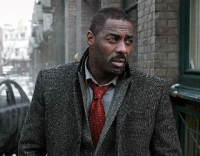
It had proven simple enough to get a copy of The Guardian's security recordings of the Emergency Room entrance, and more importantly of the surrounding parking lots. The vehicle that dropped off the mysterious stab-wound patient couldn't be seen on the hospital's cameras, but they did reveal two figures, one whose face was obscured with a hoodie, come up to the entrance, where the stab-wound victim was unceremoniously dropped and the hoodie wearing figure ran off the way they came. It would have been so much easier had they simply driven up, and gave Drayson a good view of their vehicle and license plate.
But at least he knew the time, and the direction they had approached the hospital. With that information, he had returned to the Red Aquare, and more importantly to the Custody of Roads and Transit. Like many modern cities, Moscow had thousands of cameras watching it's streets and intersections. At least, there were thousands that were publicly known of. There were thousands more that were less openly advertised, but the paperwork to gain access to those would take a few hours to clear, at the best of times.
He had acquired three of that Custody's staff to help sift through the camera feeds. They had an approximate time, and an idea of direction, and had been able to narrow down their search accordingly. Computer software analyzed the number of passengers, helping to narrow down just how much time they needed to spend staring at monitors.
He leaned over the shoulder of a young woman, one of the many computer specialists that worked in the Custody, as she expertly cycled through the camera logs of one of the roads approaching the Guardian. They had narrowed it down to within a half hour of when the victim had been dropped on the steps of the hospital, but so far nothing had caught their eye. The cameras were more then capable of getting a good look at the faces of the drivers, and often the passengers, of the passing vehicles, but after cycling through the feeds twice, there just wasn't anything to go on.
Either the victim and his friend hadn't come to the hospital in a vehicle, or they were in the back of one of countless vans and trucks that could easily hide the two passengers, and had dropped off somewhere the Custody of Roads and Transit simply couldn't see.
"Why can't it ever be easy."
He stood and rubbed at his eyes tiredly; he couldn't fathom how some people made their living working at computers. The monitors here were far better then what he used in school, but they still seemed to give him a headache. Of course, that could also have something to do with the fact that he had been hunched over and peering at the screen for too long.
He thanked the three technicians he had appropriated and let them return to their day jobs; which was basically exactly what they had just been doing, but mostly just to watch for accidents or problems with the traffic flow. The angles of view of all the cameras they had accessed were arrayed on an interactive map of Moscow on his Wallet, as well as the license plates of the dozens of vans and trucks that the mystery men could have been hidden in, but he doubted he was going to find anything there.
He exited the building to stand within the walls of the Kremlin, and took a slow sip of terrible communal office coffee pot dregs. His sip was stopped and he lowered the cup to work a mouthful of coffee grinds. There was a brief moment where he nearly entertained the idea of spitting the grinds out, but that simply wouldn't do in so prestigious an area, so he sighed quietly and swallowed, taking a few more shallow sips of coffee to help rinse his mouth of errant grinds, then delivered the cup to the nearest trash can. It was going to be a very long day.
It was while he dealt with that mouthful of coffee gunk that he had an epiphany. Not too far away, a van was parked near an open manhole, a few safety cones put out to ward off foot traffic. One technician fed a roll of cable into the open hole to his partner in the tunnels below.
The tunnels. The city was a bloody maze beneath the streets. Who said the knife victim and his friend had approached the Guardian in a vehicle? What if they had used the service tunnels, or the metros? Or the sewers even. The medical report did indicate the man had been dirty, and that he had reeked to high heaven, although that had been attributed to the fact the fellow had soiled himself, on account of being nearly stabbed in the heart.
He grinned faintly and made his way to the Custody in charge of those tunnels.
Another few hours later, and he had something to work with finally. They hadn't actually spotted any suspicious movement on what few working cameras they had, but he now knew of dozens of ways to reach the streets near the Guardian, and which ones didn't have working surveillance. His map was growing more and more complicated, and the best way to think was to go for a walk.
Continued in: Browsing
Edited by Drayson, Aug 11 2013, 07:02 PM.
|
|
|
|
| Browsing |
|
Posted by: Nadia - 07-25-2013, 12:07 PM - Forum: Commerce Row
- Replies (7)
|
 |
The market stretched as far as Nadia could see down the long street before her. Each side was lined with any sorts of things you could imagine. Here, a hawker called of the finest silk anywhere to be found, spun in the very heart of District III and handwoven to ensure that every thread... There, a hobbled over old lady selling home made sweets, little amber colored sugar drops in a little bag... there, an ally full of chickens, of all things, with a man in front scrambling up omelettes for hungry diners who ate on simple bamboo mats at a low table... It was quite the sight to see.
"Stay close, Zoe, and if we get separated, lets meet at the omelette table, okay?" Zoe nodded enthusiastically and immediately began tugging her mother over to the sweet stand. After a couple of dollars were exchanged for the little bag, they made their way a little further down the thoroughfare.
The milling of all the bodies down the busy market was a common feeling for Nadia, though the particulars of the location were new. She had lived in cities her whole life. She was accustomed to taking in a person at only a glance and being a fair judge of safety. Of course, there were always devious pickpockets with a smile on their face, but even for those, she knew most of their tricks. Growing up in a privileged life may coddle some, but Nadia had made a point to be out amongst people and had always had friends from some of the less savory social classes as a child.
Now, watching Zoe eye a few boys starting an impromptu football match up the road, she could feel the beginnings of the same dread that must have clutched her mother's chest each time that Nadia herself "wandered" into the streets. I am NOT my mother. I will NOT make her mistakes. Who was she really trying to convince, though. No one knew who her mother was here in the big city, in the Central Dominance. She was another nameless face, albeit a pretty one, and no one had any expectations for her or her daughter, and if people cared to judge her for being a single parent, well, there was nothing she could do about that. Zoe would be starting into school the following week and she would be just as well dressed and better educated than most of her classmates.
Nadia stopped to observe a street performer juggling very sharp looking knives. She watched with fascination for a moment as deft hands snatched blades from the air, sometimes tossing one behind his back and spinning them in ways where you think it would be impossible to catch safely, yet each time he did. "Hey do you see this Zo--" Her voice cut off as she looked around to realize that the dark haired girl was suddenly no where to be seen. "Zoe?!"
|
|
|
|
| Furia and the Atharim |
|
Posted by: Ascendancy - 07-24-2013, 05:48 PM - Forum: General Discussion
- Replies (24)
|
|
I hear there were lively inquiries into the nature of the relationship between the Atharim and the Furia.
Questions which came up:
Do the Atharim see them as useful people, or useful things? Are they an asset that belong to the Atharim? What would they do if they encountered a Furia that wasn't of the Atharim? What if they're able to identify them at birth, or if an Atharim Furia were to run off to birth her child away from the Atharim fold? If the Atharim can identify potential Furia, would they go out of their way to acquire them and raise them as their own?
As an example, Rune. Was her mother really killed by a Wefuke? Is her uncle really her uncle? Or was she a Furia of the Atharim, who tried running away? What if they came after her, killed her, and gave her child to one of their own? Her 'uncle' in this case. Are they really related?
Rune was just an example, as her background story lends to the 'question' easily. But yeah-- Do the Atharim see Furia as people with useful skills, or as a thing, a creature that had been made specifically to help the Atharim do what they do?
And, drum roll please, the answer:
This was the exact sort of thing i meant by the events from here on out being author driven. You guys, as writers especially of the 'new generation' of atharim get to do some world building in all this! I specifically left some things ambiguous so players can have a chance to craft.
Therefore, the discussion is now officially open. What say you, players?
The best place to start, I believe is to ask yourselves this. Are Furia human at all?
|
|
|
|
| Aria |
|
Posted by: Aria - 07-23-2013, 06:19 PM - Forum: Biographies & Backstory
- Replies (48)
|
 |
Character Name: Aria Piccolo
Age: 29
Origin: Santa Lucia, Italy (just outside of Rome)
Occupation: Field Hunter for the Atharim
Psychological description: Aria has a hard time getting to know people, she prefers to remain distant for fear of being overwhelmed. Aria takes pride in everything she does. Her moral compass does not always point in the direction of the law - she was after all taught how to kill monsters, regardless of their human appearance. Aria appears to be cold and distant but underneath she crave that human contact and a deep relationship, she just doesn't know how to balance her 'talents' with real life.
Physical description: Aria has dark hair and green-blue eyes. She is small in stature, barely clearing 5 foot. Aria always cares two swords on her back and two guns holstered at her waist. Aria prefers close fitting clothes, jeans and t-shirts are her typical attire.
Powers & Supernatural Powers: Atharim, Sentient (believes she's Furia)
Biography: ** updated 2/3/2014 to explain Furia vs Sentient
Aria knows little about her birth. What she believes is she was born outside of Rome in the town of Santa Lucia, Aria was the daughter to one of the Vatican Historical Societies field hunters. His mistress gave birth to their daughter in secret. Once he found out he stormed their house and took the days old baby from her and left her alone in her grief until her last dying day. Aria was not given his as he was not proud of her birth but he accepted the role of mentor.
However there is little truth in what Aria believes. Aria's mother was indeed a field hunter for the Atharim, she was Furia after all. Aria's birth was controversial to say the least. Her mother had been assigned to go in under cover to hunt a sentient. He had been making trouble just outside of Rome itself. Unfortunately her mother was tricked by the sentient and fell in love with him. Knowing any future with him was not going to happen easily she decided to flee the Atharim, but he refused to leave with her. Soon afterwards Aria's mother found out she was pregnant. Being on the run from the Atharim and pregnant soon lead to complications. She started back to Rome but never made it past Santa Lucia before she gave birth to a little girl.
It was only days later that the Atharim caught up to Aria's mother. Her child, Aria, was taken from her and the Atharim shot her in the head for deserting. They had little feeling for Furia who would not be part of their legions.
The babe was given to the Vatican Historical Society to be trained and raised as Furia. As is tradition.
Aria was raised by Father Dimitri and was very close to the her as she grew up, but the older she became the distance grew profoundly.
The first time Aria left the Vatican when she was very young, she was overwhelmed with so many emotions Father Dimitri thought she was sick. The onslaught of despair from the global catastrophe and those seeking hope at the Holy City had been the cause, and that was when Aria started her Furia training.
From the days she could first remember Aria had been brought up to be nothing more than a living weapon. She trained day in and day out with weapons, with books. She could recite the bible nearly from memory. Father Dimitri drilled her in anything and everything the Atharim knew.
Aria's favorite past time was practicing with varying weapons. Swords were her favorite. Father Dimitri told her it was anarchic and not enough to kill the monsters she was to hunt when she came of age. Aria practiced with everything but Swords still remained her favorite even as she grew to appreciate modern firearms. Aria carried two swords and two handguns, despite her father's objections.
Aria learned to hone her extraordinary sense of emotion. But not well enough. Aria and one of the more junior Atharim in training started seeing much of each other, feelings and intimacy grew. Venturing their first kiss in the depths of the library Aria found herself not only feeling her own passion but his as well. The intense emotions they both felt were too much for Aria she passed out and fell to the floor. The boy thinking she was dead fled the scene. When Father Dimitri found her he realized what she was and that her training had been all wrong.
It was this mishap that made Father Dimitri realize Aria was not Furia. She was Sentient. Father Dimitri had started keeping Aria away from people. He had also only allowed those who could control their emotions around Aria to train her. Father Dimitri kept the fact that Aria was Sentient secret, she was a good enough Furia, far more effective in some cases than others of her supposed kind but at a disadvantage when it came to the world at large.
Father Dimitri never told Aria the truth, nor did he reveal his findings to any other. To be Sentient was to be hunted. And for whatever it was worth to Aria, he did care a great deal for the child he had come to know and raise as nearly one of his own.
It wasn't a pretty life, nor was it a fun life, but it was all Aria knew until she came of age and was shipped off to Moscow to be a part of their new headquarters.
Back Stories
Final Steps - Part I
The Dracula Inquisition
RP Timeline
Aria's Complete Story
|
|
|
|
|